
Our CSRD services for you
Does your company fall under the Corporate Sustainability Reporting Directive (CSRD)? This will be the case for large capital market-oriented companies from the 2024 reporting year onwards. Companies that fall under the directive will in future have to provide extensive information on sustainability in their annual reports.
:response supports you in your optimal preparations for the reporting requirements – from CSRD-compliant materiality analysis to the alignment of sustainability strategy, processes, and data management with CSRD requirements, right through to the preparation of the report.
What is the CSRD?
The EU Corporate Sustainability Reporting Directive (CSRD) replaces the previous non-financial reporting requirement (EU Non-Financial Reporting Directive, NFRD). The EU’s goal is to put sustainability reporting on an equal footing with financial reporting.
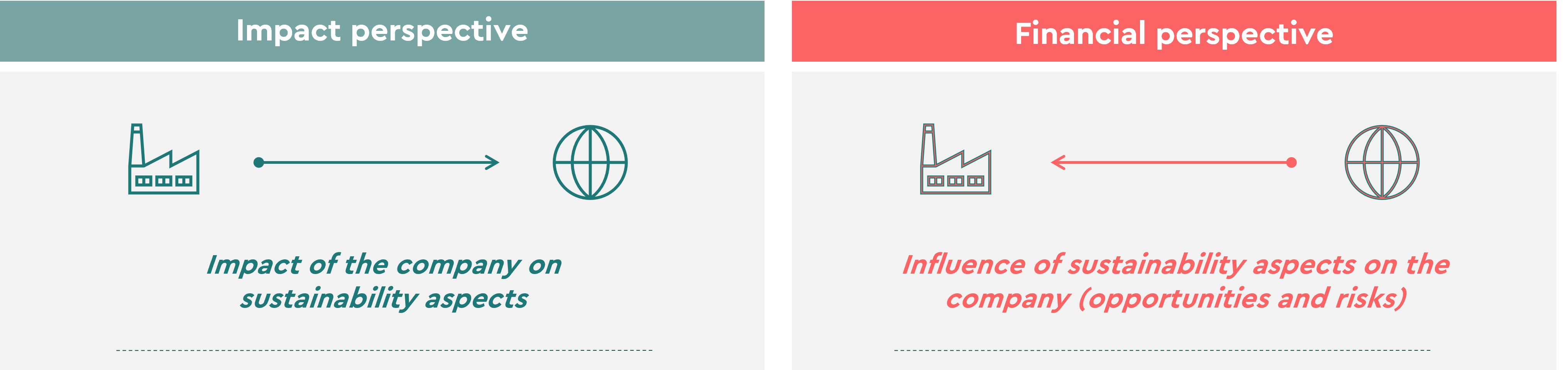
A central part of the CSRD are the European Sustainability Reporting Standards (ESRS), the EU’s uniform standards for sustainability reporting. Companies that are required to comply with the CSRD for sustainability reporting in the future must apply these binding European standards. The standards require disclosures on environmental, social, and governance issues—on the impact on sustainability, on sustainability risks and opportunities for business activities, and on targets, processes, and measures to counteract these. These qualitative disclosures are supplemented by key figures, including those relating to climate, natural resources, and human resources.
Who is affected by the CSRD?
Sustainability reporting under the CSRD
The requirements of the Corporate Sustainability Reporting Directive (CSRD) have been significantly amended by the European Omnibus I package. For companies falling under the reporting obligation for the first time, the financial year 2027 is generally envisaged. Where the financial year coincides with the calendar year, the first publication will therefore take place in 2028.
Under the amended EU legal framework, the reporting obligation generally applies to companies that exceed both of the following thresholds:
-
- an average of more than 1,000 employees during the financial year and
- net turnover of more than 450 million euros.
For parent companies, the reporting obligation must be assessed at a consolidated level where applicable. A focus on the capital markets is not required for the application of these thresholds. Listed small and medium-sized enterprises no longer fall within the mandatory scope of application solely on the basis of their stock market listing.
The transposition of the CSRD into national law may still be pending in your jurisdiction. Until the implementing legislation takes effect, existing national requirements for non-financial reporting continue to apply. Companies should therefore check the status of national implementation and comply with the applicable reporting obligations and transitional arrangements.
We recommend that affected companies review their reporting obligations at an early stage and establish the necessary processes, data and responsibilities. We would be pleased to assist you in this process.
Our CSRD services for you:
- Gap analysis: Comparison of existing sustainability strategy, data management, and reporting processes with CSRD/ESRS requirements
- Roadmap for the step-by-step implementation of the requirements from CSRD/ESRS
- Conducting a materiality analysis in accordance with CSRD based on the principle of double materiality
- Analysis of sustainability risks
- Consulting support for the introduction and further development of strategies and processes for sustainability management
- Identification of qualitative disclosures and metrics to be collected in accordance with CSRD, as well as advice on data collection and the establishment of data management systems
- Conceptualization and creation of a sustainability report or chapter of the annual report
Contact us
We are here to answer your questions. Together with our customers, we create an environment in which people enjoy getting involved. We create value for people, organisations and society.


